A bathroom vanity unit is one of the most useful products in the room. It holds the basin, hides pipework, gives storage and helps set the style of the whole bathroom. A good unit can make a small room feel calmer and a larger room feel properly finished. A poor choice can block movement, waste storage space or make cleaning harder than it needs to be.
This guide is written from a showroom point of view. When customers compare bathroom furniture in person, the right answer is rarely just the nicest colour. We look at the room size, the pipework, the people using the bathroom, how much storage is needed and whether the unit will still feel practical once towels, toiletries and cleaning products are in the room. You can browse our basins and bathroom furniture range alongside this guide.
What this bathroom vanity guide covers
This guide covers the main decisions you need to make before ordering a vanity unit: width, depth, wall-hung versus floor-standing, basin style, storage layout, finish, handles, plumbing access and small bathroom planning. It is designed for UK homes where bathrooms often have awkward pipe positions, windows, boxing, narrow doorways or limited floor space. A product can look perfect online and still be wrong for the room if these details are missed.
The guide also explains how to think about furniture as part of the whole bathroom rather than as a single item. A vanity unit affects the mirror height, lighting position, tap choice, waste connection, towel location and walking space. It also needs to sit comfortably with the toilet, shower screen, radiator and door swing. Choosing the vanity early can make the rest of the design easier.
If you are planning a renovation, take rough measurements before you fall in love with a style. Measure the wall width, the available depth, the position of the waste pipe, the height of any window board and the distance to the toilet or shower opening. Those measurements give you a much better starting point than guessing from product photos.
How to choose before you order
Start with how the bathroom is used. A main family bathroom needs storage that can cope with daily use. An en-suite may need a quieter, more polished feel. A cloakroom may only need a compact basin unit with enough space for soap and spare toilet rolls. A rental property may need durable surfaces and simple replacement parts. When the purpose is clear, the choices become easier.
Next, decide what the unit must hide or hold. If there is awkward pipework, a unit with sensible internal access may save frustration later. If the room always feels cluttered, drawers may be more useful than open shelves. If the bathroom is narrow, a slim-depth unit may protect movement space. It is better to solve the daily problem first and then choose the colour and handle style.
Finally, check the practical fitting details. GOV.UK publishes guidance on water fittings regulations and specifications, which is useful background for understanding why plumbing and water safety matter. You do not need to become a plumber to choose a vanity, but you do need to respect the fact that it is connected to a working water system.
Wall-hung vanity units
Wall-hung units are popular because they make the floor easier to see and clean. In a small bathroom, that visible floor space can make the room feel lighter. They also suit modern designs, especially when paired with a neat basin, a simple mirror and clean wall finishes. The look is tidy, and the storage is usually enough for everyday toiletries.
The wall itself matters. A wall-hung vanity needs secure fixing, so the installer must know what is behind the wall and whether extra support is needed. This is especially important with heavier units, stone-effect worktops or larger basins. If the wall is not suitable, a floor-standing unit may be safer and more cost-effective.
Wall-hung does not always mean more spacious. Some wall-hung units are still deep, and the open floor below can become a place where bottles or bins gather if storage has been underestimated. It is a strong choice when fitted properly and matched to the way the room is used.
Floor-standing vanity units
Floor-standing units can feel solid and traditional, and they often give a little more storage for the same width. They are useful in family bathrooms, larger rooms and spaces where wall fixing is awkward. Because they sit on the floor, they can also hide pipework more easily in some layouts.
The main thing to check is visual weight. A floor-standing unit in a small room can feel bulky if it is too deep or too dark. Choosing a lighter finish, a slimmer profile or a unit with legs can help. The goal is to gain storage without making the bathroom feel cramped.
Cleaning around the base is another practical point. If the unit sits tight to the floor, it may be simple to wipe around but less airy. If it has legs, the room can feel lighter, but the floor underneath needs cleaning. Neither is wrong; it depends on your habits and the style of the bathroom.
Choosing the right width and depth
Width is the measurement most people check first, but depth is often the one that causes problems. A 600mm unit may sound compact, but if it projects too far into the room it can block the route to the shower or make the toilet feel squeezed. In cloakrooms and en-suites, slim-depth furniture can make a big difference.
Before ordering, mark the unit footprint on the floor with tape. Stand in front of it, open the door, pretend to use the basin and check whether someone can still move past. This simple test is surprisingly useful. It quickly shows whether the room feels comfortable or whether the furniture is stealing too much space.
Also check basin projection. Some basins sit proud of the unit, and countertop bowls can change the usable height. A unit that looks fine on paper may feel too high or too deep once the basin is included. Product dimensions should be checked as a complete setup, not as separate parts.
Drawers, cupboards and tall storage
Drawers are excellent for daily toiletries because you can see what is inside without crouching. Cupboards can be better for taller bottles, cleaning products or spare items. Tall units are useful when floor space is limited but wall space is available. A good bathroom often uses a mix rather than relying on the vanity alone.
Think about what you actually store. Many bathrooms need space for toothbrushes, skincare, spare shampoo, medicines, cleaning sprays, toilet rolls, towels and hair tools. If those items do not have a home, they usually end up around the basin or window. Storage is not just about capacity; it is about keeping surfaces calm.
For small rooms, avoid making every wall busy. A vanity plus a mirrored cabinet may be enough. In a larger bathroom, a tall unit can balance the room and reduce clutter. The best storage plan is the one that reflects how the household really uses the bathroom.
Finish, colour and handles
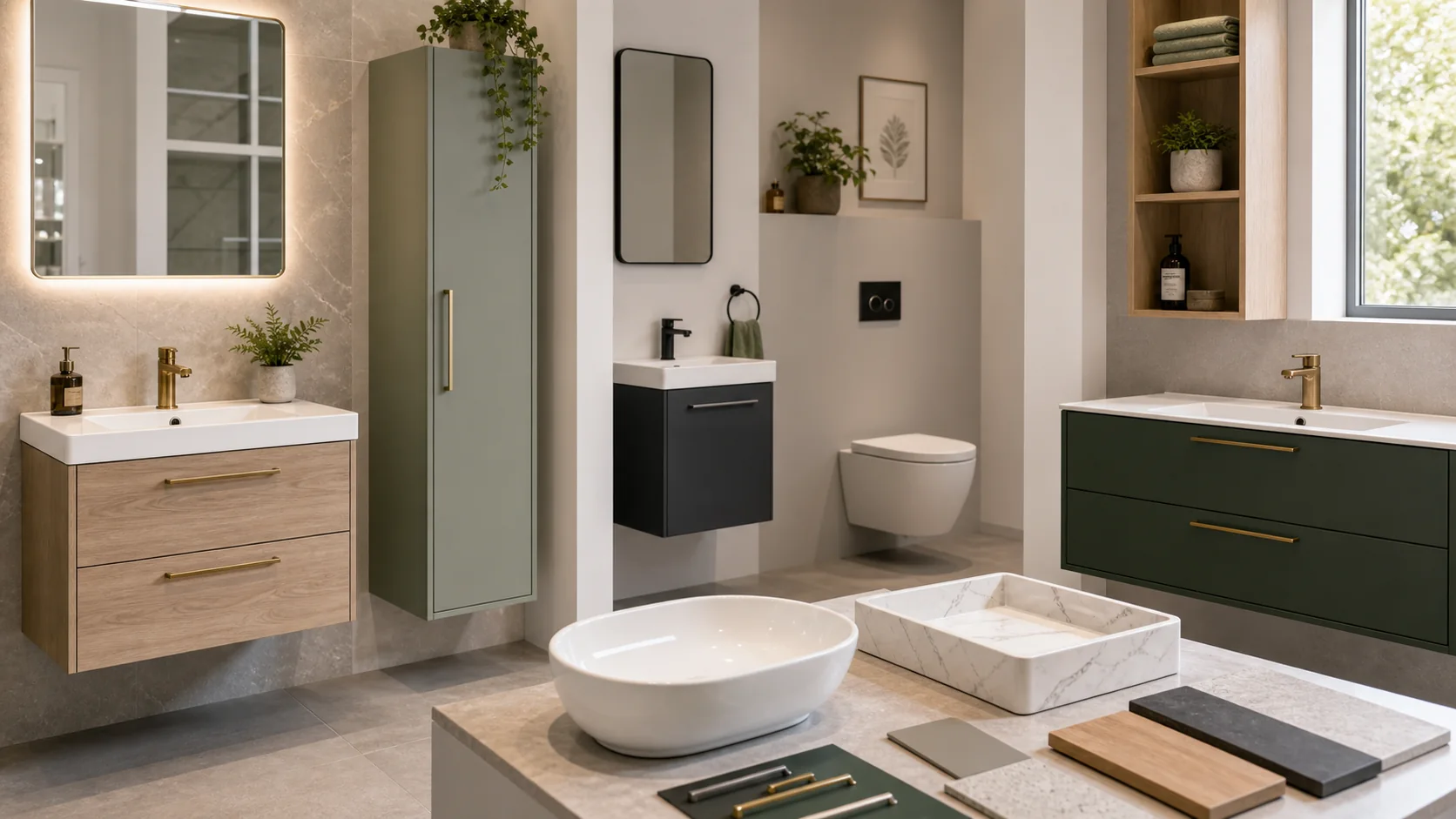
Furniture finish should work with the wall finish, floor, brassware and lighting. Wood tones can warm up a white bathroom. Sage green or dark green can add character without feeling too harsh. Gloss white can reflect light, while matt finishes can feel calmer and more modern. The same unit can look completely different depending on the products around it.
Handles and taps should be chosen together. Brushed brass handles beside chrome taps can work if the design is intentional, but mixed finishes can look accidental if there is no plan. Black, chrome, brass and brushed nickel all create a different mood. If you are unsure, compare samples beside the vanity before ordering.
Durability matters too. Bathrooms are humid spaces, so furniture should be suitable for bathroom use and installed with sensible sealing and ventilation. A beautiful finish will not stay beautiful if the room cannot dry properly or if water is allowed to sit on edges every day.
Common buying mistakes
The most common mistake is buying a unit that is too deep for the room. The second is forgetting the pipework. The third is choosing storage based on how the bathroom looks empty rather than how it will look on a busy weekday morning. A showroom display is tidy because everything has been edited; your bathroom needs to handle real life.
Another mistake is treating the mirror as an afterthought. The vanity, basin, tap and mirror should line up visually and work comfortably. If the mirror is too narrow, too high or clashes with a cabinet door, the basin area will never feel quite right. Lighting should also be considered early, especially if you want an LED mirror or wall lights.
Finally, do not forget delivery access and fitting sequence. Large furniture may need careful handling through narrow halls or upstairs landings. If the bathroom is being renovated, the fitter needs the unit at the right stage, not after the wall finish and plumbing decisions have already been fixed.
Speak to TikiTaki Bathrooms
If you want a second opinion before ordering, the showroom team can help you compare sizes, finishes and practical fitting details. Bring rough measurements, a few photos of the current bathroom and any product links you already like, and we can help you narrow the choice down without making the room more complicated than it needs to be.
- Phone: 01978 803075
- Email: info@tikitakibathrooms.com
- Showroom: Unit 1 Wrexham Industrial Estate, Bridge Road South, Wrexham, LL13 9SQ
- Socials: Facebook and Instagram