
Blog
Waterproof Bathroom Flooring for UK Homes
Bathroom flooring has to do a lot more than look nice. It deals with damp feet, splashes, cleaning products, bath mats, temperature changes and heavy fittings. In some homes it also has to work around uneven subfloors, old boards, underfloor heating or a tight renovation budget. That is why choosing bathroom flooring should be treated as a practical decision as well as a design decision.
The right floor can make a bathroom feel warmer, safer and easier to clean. The wrong one can lift, mark, trap moisture or make the room feel unfinished. There are several good options, including SPC, LVT, vinyl, tile-effect flooring and traditional tiles. The best choice depends on the room, the household and the way the floor will be fitted.
This guide is written for homeowners comparing bathroom flooring before a renovation or product upgrade. It is not about pushing one material for every room. It is about understanding the checks that help you choose confidently.
What This Bathroom Flooring Guide Covers
The first thing to understand is the difference between waterproof and suitable. A product may be water resistant or waterproof in itself, but the finished floor also depends on preparation, edges, joins and fitting. Water can still cause problems if it gets underneath a floor covering and cannot dry. This is especially important around baths, showers, toilets and basin areas.
SPC and LVT are popular because they can give a warmer feel than ceramic tiles and often come in realistic wood or stone finishes. SPC has a rigid core, which can make it feel firm underfoot and useful for certain installations. LVT can feel comfortable and is available in many styles. Traditional tiles are durable and familiar, but they need good preparation and grout maintenance. Sheet vinyl can be practical in some settings, but the finish and fitting quality matter.
Safety also matters. Bathrooms can be slippery, especially when used by children, older relatives or guests. Look at texture, cleaning guidance and how the floor feels when damp. The Health and Safety Executive has guidance on slips and trips in general, and its advice is a useful reminder that surface choice and housekeeping both matter in wet areas: HSE slips and trips guidance.
How to Choose Flooring Before a Bathroom Renovation
Start with the subfloor. A good floor covering needs a suitable base. If the subfloor is uneven, damaged or damp, that problem should be dealt with before the new finish is installed. A beautiful floor will not perform properly if it is fitted over a poor surface. This is one of the reasons a full renovation can cost more than a simple product swap; the preparation work is part of the final result.
Next, think about warmth and comfort. Tiles can look clean and premium, but some people find them cold without underfloor heating. SPC and LVT can feel more comfortable for everyday family use. If the bathroom is used early in the morning, by children or by anyone who dislikes cold floors, comfort may be more important than a purely visual choice.
Finally, consider how the flooring meets other products. Door thresholds, bath panels, shower trays, toilets and vanity units all affect the finish. If the floor is going under furniture, check the product weight and installation instructions. If the floor is being fitted after the main products, check that cuts and edges can be finished neatly.
SPC Flooring and Rigid Core Options
SPC flooring is often chosen for bathrooms because it has a rigid core and can offer a stable, practical finish. It is available in wood and stone looks, which makes it useful when you want warmth without using real timber. It can suit modern bathrooms, cloakrooms and family spaces where the floor needs to be easy to clean.
As with any product, check the specific installation guidance. Room size, subfloor condition, expansion gaps, edge sealing and manufacturer instructions all matter. Do not assume that every rigid floor is fitted in exactly the same way. If you are unsure, bring the room details into the showroom and ask before ordering.
LVT, Vinyl and Tile-Effect Flooring
LVT and vinyl products can be practical in bathrooms when chosen and fitted properly. They are often softer underfoot than tiles and can work well when the room needs a warmer, quieter feel. Tile-effect designs can also give a clean bathroom look without using traditional grout lines across the whole floor.
The main thing is to avoid treating these products as an afterthought. Check thickness, wear layer, backing, fitting method and suitability for bathrooms. A budget floor may be fine for a low-use cloakroom but less suitable for a busy family bathroom. Matching the product to the use is what keeps the floor looking good.
Traditional Tiles Still Have Their Place
Tiles remain a strong choice for many bathrooms. They can be durable, heat resistant and available in a huge range of styles. In the right room, a tiled floor can look excellent. The trade-off is that preparation and fitting are important, and grout lines need maintenance over time.
If you choose tiles, think about slip resistance, grout colour and the size of the tile in relation to the room. Very large tiles can look smart but may need more careful preparation. Smaller tiles can suit awkward spaces, but they create more grout lines. The right answer depends on the room rather than a single rule.
Do Not Choose Flooring in Isolation
Flooring should work with the wall finish, furniture and lighting. A dark floor with dark walls can feel heavy in a small room unless the lighting is strong. A very busy pattern can compete with marble-effect panels or statement furniture. A pale floor can brighten a room but may show marks more easily depending on texture.
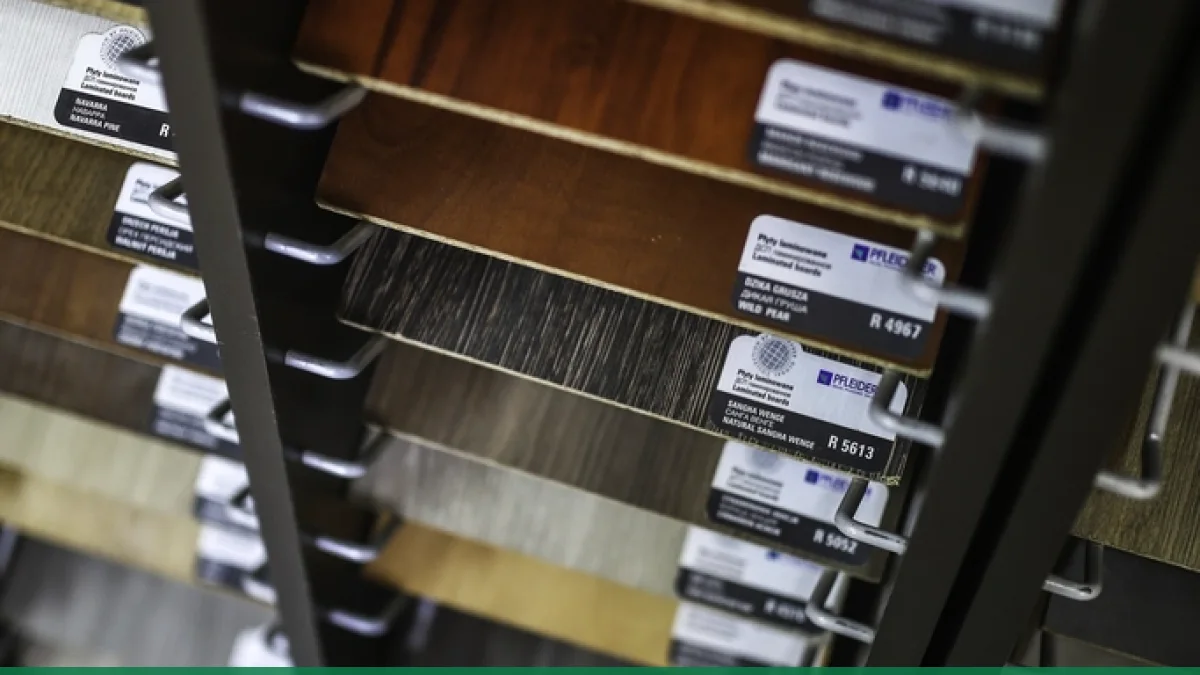
Bring samples together before buying. Compare the floor against wall panels, vanity finishes and the main paint or ceiling colour. A few minutes with samples can prevent a combination that looks good individually but feels wrong once fitted together.
Doorways and thresholds deserve the same attention. A bathroom floor often meets carpet, laminate, tiles or landing boards just outside the room. If the finished height changes too much, the threshold can look untidy or become a trip point. Ask how the new floor will meet the next surface before choosing thickness and fitting method.
It is also worth thinking about future access. Toilets, vanity units and bath panels may need maintenance at some point. A flooring choice that looks good but traps every fitting in place can make later repairs more awkward. A fitter can usually explain the best sequence for your room, especially if the flooring is being installed as part of a full renovation.
Speak to TikiTaki Bathrooms
If you are planning a bathroom project and want a second opinion before ordering, the showroom team can help you compare sizes, finishes and practical fitting details. Bring rough measurements, a few photos of the current room and any product links you already like, and we can help you narrow the choice down without making the bathroom more complicated than it needs to be.
- Phone: 01978 803075
- Email: info@tikitakibathrooms.com
- Showroom: Unit 1 Wrexham Industrial Estate, Bridge Road South, Wrexham, LL13 9SQ
- Socials: Facebook and Instagram